By Rami Mamar, RCIC (R515110). As of November 16, 2026.
Moose Jaw, Saskatchewan is one of 14 communities in the Rural Community Immigration Pilot, and the Moose Jaw & District Chamber of Commerce runs it locally. As listed on the Chamber's Moose Jaw Rural Community Immigration Pilot site on November 16, 2026, you cannot apply to the Chamber yourself: a designated employer in the Moose Jaw boundary must offer you a job in one of 25 priority occupations, and that employer submits your community recommendation application during a monthly intake. On November 9, 2026, IRCC said the pilot is becoming a permanent program in its Overview of the Rural Community Immigration Program, and the pilot's own pages say it closes on January 1, 2027. The federal rules are on IRCC's Rural Community Immigration Program page. For the national picture, see our Rural Community Immigration Pilot (RCIP) guide.
Key points
The local partner is the Moose Jaw & District Chamber of Commerce. Its site says Moose Jaw is "one of only 14 communities across Canada" partnered with IRCC.
Candidates need a full-time, non-seasonal, indeterminate job offer from a designated employer in one of 25 priority NOCs, and the employer's sector must be a priority sector too.
The Chamber's 2026 intake windows run monthly. The last one on its homepage is November 16 to 20, 2026, with up to 12 recommendations per intake on a first come, first served basis (per its employers page).
As listed on November 16, 2026, the 2026 maximums for NOC 63200 (Cooks) and NOC 62010 (Retail Supervisors) have been reached, so the Chamber is not accepting applications for those two.
IRCC's minimums: 1 year (1,560 hours) of related paid work in the past 3 years, CLB 4 to 6 depending on TEER, a Canadian or assessed foreign education credential, and settlement funds unless you already work in Canada on a valid work permit.
The Chamber's site lists no December 2026 or 2027 intake dates and does not mention the move to the permanent program.
What does this mean for your PR plans?
Answer a few quick questions and see which permanent residence programs you may qualify for. Free check from a licensed RCIC team.
The community partner is the Moose Jaw & District Chamber of Commerce, which operates the RCIP site at rcip.mjchamber.com. Its Moose Jaw RCIP employers page says employers must be designated by the Moose Jaw RCIP before they can submit anyone, and that the community reserves the right to restrict participation by adding application caps, restricting parts of industries or banning NOCs. In its words, "It is in the sole discretion of the community to implement restrictions of this nature, and they may do so at any time." The same page says priorities can be changed once a year during the pilot.
IRCC's job offer and community recommendation page (dated November 9, 2026) links Moose Jaw to the Chamber's site. IRCC's November 9 overview says the 14 pilot communities are expected to take part in the permanent program. It does not say anything specific about Moose Jaw's rules after January 1, 2027.
Eligible area
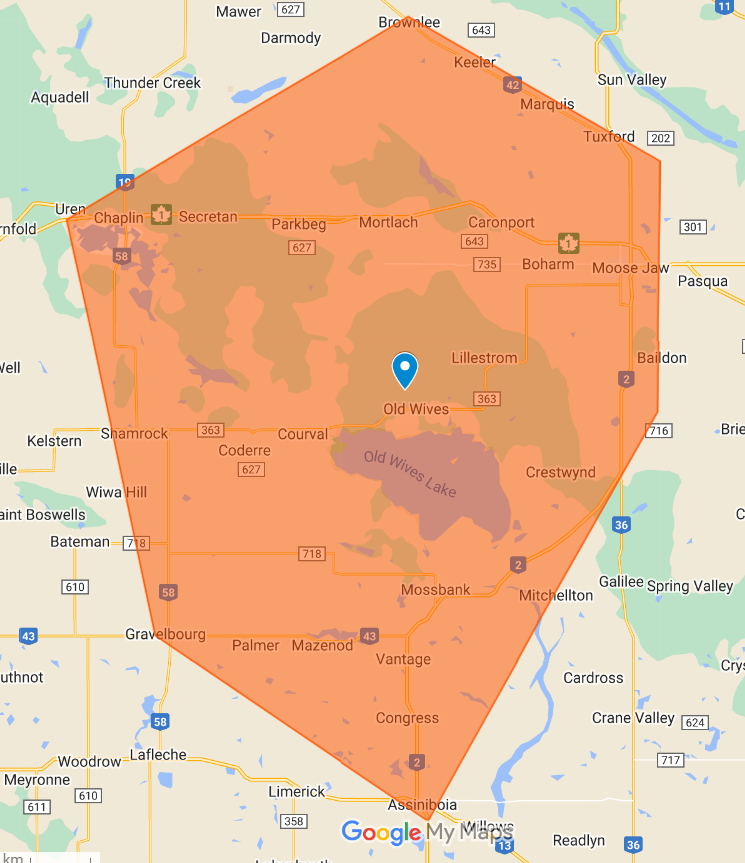
The Chamber's site refers to "eligible boundaries" and links a boundary map. The text on the site does not describe the boundary in words, so check the map before accepting a job. Two boundary rules are stated in text on the Chamber's homepage and employers page:
The homepage says employers situated within the eligible boundaries and actively engaging in business there may be eligible.
The employers page says the employee must do at least 75% of their work duties inside the community boundaries.
IRCC's Hire a candidate page also says the job must be within the boundaries of the community.
Priority sectors and occupations for the current intake
As listed on the Chamber's employers page on November 16, 2026, there are six priority sectors: Business, Finance and Administration; Sales and Service; Trades and Transport; Manufacturing and Utilities; Education, Law and Social, Community and Government Services; and Health.
Sector comes before occupation. The Moose Jaw FAQ says that if your NOC is not a priority, you are not eligible, and that if your NOC is a priority but your employer's sector is not, you are not eligible either.
The 25 priority NOCs, as listed by the Chamber:
NOC
Occupation (as listed)
33102
Nurse Aides, Orderlies and Patient Service Workers (CCAs)
33109
Other Assisting Occupations in Support of Health
42202
ECEs and Assistants
44101
Home Support Workers, Caregivers
42201
Social and Community Service Workers
12200
Accounting Technicians and Bookkeepers
14201
Banking, Insurance, and Other Financial Clerks
13100
Administrative Officer
63211
Estheticians, Skin and Nail Techs
72106
Welders and Related Machine Operators
74203
Automotive and Heavy Truck Equipment Parts Installers
72410
Automotive and Heavy Equipment Parts Installers
72411
Autobody Collision, Refinishing and Glass Techs
73113
Floor Covering Installers
75101
Material Handlers
22111
Ag and Fish Products Inspectors
95106
Food Processing Labourers
94141
Industrial Butchers and Meat Cutters
65310
Light Duty Cleaners
65312
Janitors, Caretakers, Heavy Duty Cleaners
73201
General Building Maintenance Workers and Superintendents
64314
Hotel Front Desk Clerks
60020
Retail and Wholesale Trade Managers
62010
Retail Supervisors (capped at 5% annually across all employers)
63200
Cooks (capped at 5% annually across all employers)
Advertisement
Caps and exclusions
The employers page lists these limits, which apply on top of the federal rules:
Cooks (63200) and Retail Supervisors (62010): each limited to 5% of total recommendations annually across all employers. The homepage notice says the maximum for both has been reached for 2026.
TEER 5 jobs: capped at 25% per calendar year across all employers, and each employer may submit no more than one TEER 5 application per intake.
Small food service, financial institution and transport employers: businesses with fewer than 10 full-time employees in the boundaries get one community recommendation per calendar year across all NOCs.
Excluded businesses: gas stations (except truckstops), convenience stores, and IT or web development.
How candidates apply
The steps below follow the Chamber's candidates page as listed on November 16, 2026.
Get a valid job offer from a designated employer. The Chamber's FAQ says its team "does not assist individuals with finding employment."
Give the employer all required documents. The Chamber publishes a documents checklist on its employers page.
The employer submits the community recommendation application during a monthly intake period.
The Chamber processes it pass or fail. Incomplete or erroneous applications lose their place and are returned for correction and resubmission in a later intake.
If approved, the candidate receives a community recommendation certificate. The candidates page says it is valid for 6 months.
The candidate applies to IRCC for permanent residence. The Chamber notes that approval is at the discretion of IRCC officers.
If you already work in Moose Jaw, the FAQ says your employer can apply for you while you stay in the job if it is designated or willing to register, with no new job offer needed. The candidates page says candidates applying from within Canada must have valid status to study or work when they apply, and the Chamber says those on visitor status or who maintained visitor status are not eligible. The FAQ also says applying from outside Canada is possible under the same rules, with proof of funds.
The FAQ states the wage must meet or exceed the Job Bank minimum for your NOC and region, which you can look up with the Job Bank wage search.
Intake dates
All times are Central Standard Time, as listed on the Chamber's homepage on November 16, 2026. The page lists 2026 only.
Month (2026)
Opens
Closes
March
March 9, 8 AM
March 13, 4 PM
April
April 13, 8 AM
April 17, 4 PM
May
May 11, 8 AM
May 15, 4 PM
June
June 15, 8 AM
June 19, 4 PM
July
July 13, 8 AM
July 17, 4 PM
August
August 10, 8 AM
August 14, 4 PM
September
September 14, 8 AM
September 18, 4 PM
October
October 12, 8 AM
October 16, 4 PM
November
November 16, 8 AM
November 20, 4 PM
The employers page says up to 12 recommendations are issued per intake, first come, first served, and that an application missing a cutoff rolls into the next intake. The Chamber does not publish a December 2026 intake or any 2027 dates. Because the pilot closes on January 1, 2027, ask the Chamber about timing before relying on a later window.
Designated employers
Employers must be designated once by the Moose Jaw RCIP. The employers page lists these conditions:
an active, genuine business under the same ownership for at least 2 years within the boundaries
operation in a priority sector and at least one priority NOC
the employee does at least 75% of duties inside the boundaries
completion of the employer onboarding training and the intercultural competency training
agreement to support the applicant's settlement and to be listed publicly on the RCIP website
no breach of the federal employer compliance regime and no misrepresentation
Consulates, staffing or employment agencies, businesses owned by an authorized immigration representative, and businesses owned or controlled by the applicant or their spouse or common-law partner cannot be designated. The employers page says designation has no charge.
The public designated employer list (August 2026 edition) is linked from the candidates page. Its cover notice says most designated employers use the RCIP to support people they already employ and are not accepting new applications, and asks candidates not to mass email employers. It suggests applying for actively advertised positions in the Moose Jaw region. The Chamber's resources page points to job boards, including Saskjobs and Job Bank, and to settlement services such as the Moose Jaw Multicultural Council and the Moose Jaw Newcomer Welcome Centre.
Get your immigration roadmap
Answer a few questions about your background and goals. See which Canadian immigration programs fit you best.
These come from IRCC's pilot pages and the new program's pages, all dated November 9, 2026. The language, funds and work experience rules read the same on the pilot and program pages.
Requirement
What IRCC says
Community recommendation and job offer
A valid recommendation certificate and a valid job offer from a designated employer in that community
Work experience
At least 1 year (1,560 hours) of related paid work in the past 3 years; self-employment and volunteer work do not count; the work must match the offer's NOC and duties at a similar TEER
Language
TEER 0 or 1: CLB 6. TEER 2 or 3: CLB 5. TEER 4 or 5: CLB 4. All four abilities; results less than 2 years old
Accepted tests
CELPIP-General, IELTS General Training, PTE Core; TEF Canada, TCF Canada
Education
A Canadian secondary or post-secondary credential, or an educational credential assessment report less than 5 years old
Settlement funds
CAD 10,507 for 1 person, 13,080 for 2, 16,080 for 3, 19,524 for 4 (figures updated July 29, 2025); not required if you already work in Canada on a valid work permit
Graduates of a public post-secondary school in the community can skip the work experience if they studied full time, received the credential no more than 18 months before applying, and (for programs of 2 or more years) lived in the community for at least 16 of the previous 24 months. IRCC lists exclusions when studying English or French made up more than half the program, distance learning made up more than half of it, or a scholarship or fellowship requires you to return home.
Moose Jaw's candidates page adds one local item: you must intend to live in the community. The Chamber publishes an Intent to Reside Statement form on its employers page.
What changes on January 1, 2027
IRCC's pilot pages say the pilot closes on January 1, 2027. A recommendation dated December 31, 2026 or earlier must be used to apply for permanent residence before it expires. IRCC's permanent residence page says the forms depend on when your recommendation was issued: recommendations dated on or after January 1, 2027 use the new program's application, and earlier ones use the pilot's.
The Chamber's FAQ says the program runs until 2029, pending funding. That wording does not match IRCC's pilot closing date, and the Chamber's pages do not describe the move to the permanent program. As of November 16, 2026, treat IRCC's dates as the federal rule and confirm Moose Jaw's post-January plans with the Chamber through its Moose Jaw contact page.
IRCC's optional work permit for the program is valid for 2 years, ties you to the employer who made the offer, and lets a spouse or common-law partner apply for an open permit in the same community. See IRCC's work permit page.
Questions people ask
Can I apply directly to the Moose Jaw RCIP?
No. The Chamber says the program is employer-driven, and candidates do not apply to the Chamber or IRCC first. A designated employer submits your application after you have a job offer.
Which jobs qualify in Moose Jaw?
Only the 25 NOCs in the table above, and only with an employer in one of the six priority sectors. As of November 16, 2026, Cooks (63200) and Retail Supervisors (62010) are closed for 2026.
Is there a points score or cut-off?
The Chamber's pages describe a pass or fail review, with up to 12 recommendations per intake on a first come, first served basis. They list no points or ranking score.
Does the job offer have to be full-time?
Yes. IRCC says the offer must be at least 30 paid hours a week, non-seasonal and indeterminate, within the community boundaries.
Can I apply from outside Canada?
Yes, according to the Chamber's FAQ, under the same eligibility rules. You must show settlement funds unless you already work in Canada on a valid work permit, per IRCC.
Will Moose Jaw take part in the permanent program?
IRCC's November 9, 2026 overview says the 14 pilot communities are expected to take part. The Chamber's site had not published program details as of November 16, 2026.
When to get help
A recommendation depends on the right NOC, an employer in a priority sector and a monthly intake, and a job offer that meets IRCC's full-time, non-seasonal and indeterminate rules. With the pilot closing on January 1, 2027, timing matters too. A paid consultation with us is CA$100, credited in full toward any retainer you sign with us within 30 days. You can book a consultation or start with our immigration assessment.
This article is for informational purposes only and does not constitute immigration or legal advice. Immigration laws and policies change frequently. Each case is unique and outcomes depend on individual circumstances. Consult a Regulated Canadian Immigration Consultant (RCIC) before making immigration decisions.
Rami Mamar is an RCIC-IRB licensed immigration consultant and Commissioner of Oaths with over a decade of experience helping clients from Iran, UAE, Syria, Armenia, and worldwide immigrate to Canada. He has overseen 10,000+ immigration cases including Express Entry, work permits, study permits, and family sponsorship applications.